Wednesday in the Woods · episode 019
Keep 'em Sharp
4:26youtube · Licensio, LLC
description
🪓💯
The not-so-secret secret behind Wednesday in the Woods is that it's not really scripted. I normally just take a chore like picking up trash from our marsh (Happy Wetlands Day!) and bring a camera. Armed with vague metaphors and auxiliary puns, I start talking try to keep it together - Bill Hader or Jimmy Fallon-style - for one whole take. That's it.
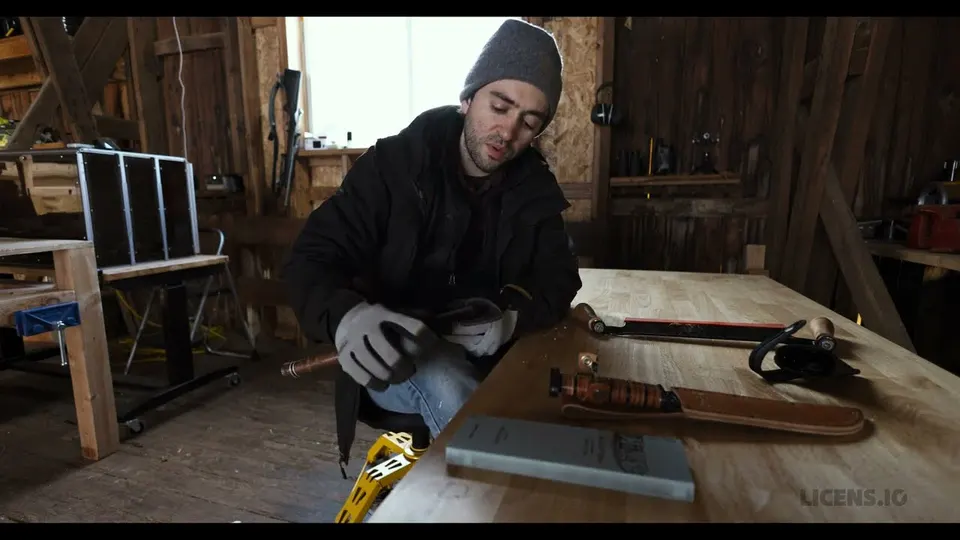
Sometimes, I modify the task to make framing the shot easier. On that note - please, do not free-hand your KA-BAR with an 8000-grit stone.
Anyway, the real question is why I'm grinding my axe and knife this week. And the real answer is simple - to stay sharp. Just like you should try to keep your people, processes, and technology sharp.
We think about proactive maintenance all the time. But for some reason, we only seem to apply it in the context of capital goods like cars or factories. In the general sense, though, we should be proactively maintaining and improving all of our organization's assets - that means the big three: People, Process, and Technology.
When we don't keep all three of these things sharp, we pay for it.
Sometimes, we pay a little bit as measured by efficiency or margin. Trees that used to take 10 strokes might take 12 or 15. If you're at least measuring, you can decide when the margin impact outweighs the cost of sharpening.
Sometimes, we pay for it with quality and defect rates. When cleaning the corners of your face cut out, you might pop the wrong angle. Then, you're redoing the whole face cut - "rework" that wastes time and energy. Even worse, if you don't notice and correct the defect, the tree might fall the wrong way...
And sometimes, just like many microscopic nicks in a blade, we can't even see when our people, process, and technology need help. The first evidence might be customer turnover or margin slippage. And when you look for that smoking gun in the root cause or after action, you might not see one big problem. In our experience, the problem normally comes back to letting your people, process, and technology get dull...
So what can you do? Just like any risk or quality program, stay on top of monitoring and proactive maintenance. Give your team purpose and incentive to commit time to honing their own skills and sharpening the technology and processes that fill the organization's "toolshed." Don't wait for things to go wrong - but when they do go wrong, make sure to identify issues, correct them, and think about how to proactively prevent them in the future. When you can't put your finger on it, don't be afraid to ask if you're even using the right tools in the first place.
Me, today? When I'm done pushing 9" of snow with the tractor, I'll be back in the barn, cleaning and repainting the loader bucket.
Stay warm - and stay sharp!
transcript
~573 words · showhide
from the human-edited captions published with the video. timestamps jump to that point in the video.
- 0:20
Good afternoon and welcome to Wednesday in the woods. Except today, we're not in the woods. We're talking about what we need to do before we go into the woods. See, when we're in the woods, it's just like an organization operationally going about its day to day business. There are tools that we use, there's people and processes and technology, and every day we take those tools and we use them to perform tasks. But over time, those people are those processes, or that technology may get a little bit dull over time.
- 0:58
Well, after spending a lot of time in use, sometimes things just get to be a little rough. They might get a little dated. They might need some updating. And so just like with an ax, it's important that we think about how we maintain our tools, our people, our processes and our technology. And just like when an ax gets to be dull or when a knife gets to be dull, tasks start to get to be a little harder. May not notice at first, right?
- 1:35
Chopping down a tree or splitting wood might take another five strokes instead of ten total. You might be up at 15. Might not think anything of it, but eventually if you let those blades continue to get dull. Just like if you let your people skills continue to get dated or your systems continue to collect a little bit of legacy crust, then eventually you'll be paying for it. Taking down that tree used to be ten strokes, turns into 50.
- 2:07
Just like when your team used to be able to work with a certain kind of customer data, as well as the customer situation grows and scales your team's skills, maybe don't keep up and things start to take longer. The margins might start to suffer in eventually. Well, that ax might not do anything. If you let it start to chip and you'll be well, you'll be left with no tools and a real problem. So just like with our ax here in the woods, we need to make sure that we keep our people, our processes and our technology sharp because when they get dull, we pay for it.
- 2:52
And that typically means we need to make sure to stay on top of it, right? We need to make sure to spend at least a little bit of time checking for when our tools don't seem to be working right. We can do that in the field when we're using them, for example, by measuring how many strokes it takes to get through a foot deep tree. Or maybe we come back into the shop and we take a look with a glass or with our eyes, and we check for any nicks.
- 3:21
And in the end, he clearly dull edges and sharpen it up. But either way, whether you do it in the process through measurement or you have some kind of proactive monitoring protocol that you use, it's critical that you don't let these things get dull because as we said, you pay for it in the end. So next time we'll be in the woods using tools that we've sharpened, just like our people and we'll see how we do. Got up to 15 degrees today, but I hope you're all staying warm and enjoying yourself.
- 4:00
See you next time on Wednesday in the woods.