Wednesday in the Woods · episode 018
Sheltering from the AI Winter
5:26youtube · Licensio, LLC
description
👩🌾💼 Are you building a 🍅 or a 🥗 company?
🛒📈 If you’re an investor, which are you throwing in your cart?
Personally, I’m a little bit focused on the prospect of an “AI winter.” And if you’ve spent much time around Globex screens lately, you’ve probably noticed that investors broadly are treating the NASDAQ-100 futures like tech as a whole will be a little arctic. June 22 $NQ looks like it’s heading to the south pole, diving from nearly 17K to under 14K in under four weeks..
In case you’re wondering, I don’t think Arks make for good ice-breakers. (Sorry, Cathie Wood $ARKK).
Anyway, on this week’s Wednesday in the Woods, I’m not here to talk to you about buying naked puts on QQQ. I’m here to talk to you about the different strategies for building businesses - and how they look a lot like growing food.
Let’s take a simple view of the world. On one hand, you can grow something like a tomato. Good heirloom tomatoes, grown in real soil, free from split and rot, never frozen, can go for a real song (just ask Steve Harmon about the hothouse variety!).
But getting there is a real trip. Late frost. Hornworms. A litany of fungal issues. Swings in humidity or water uptake. N-P-K ratios and micronutrient timing, let alone nutrient costs…
Behind every prize heirloom you see at the store or farmers’ market, there are dozens - maybe hundreds - of ungerminated seeds, leggy seedlings, withered vines, and rotted fruit.
Tomatoes are a high-risk, high-reward strategy with a lot of sensitivity to conditions.
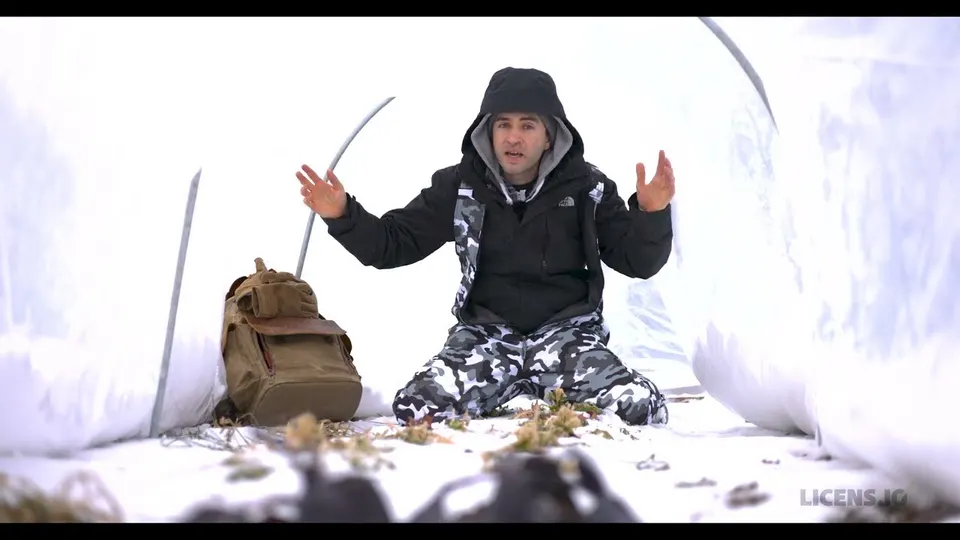
At the other end of the spectrum, you can grow greens in a low or high-tunnel. While greens have their share of issues, like armyworms or fusarium, they are generally a much lower-risk, more robust strategy. With shade cloth and misting, you can grow greens in the hottest of climates. And, as I show in today’s video, you can grow greens in climates where this morning’s temperature was -8F.
It's a different strategy that takes a little bit of planning and up-front investment, but it's far less sensitive.
Like growing in general, your business doesn’t *have* to be a monoculture. If you grow both tomatoes and greens, you know that you’ll have something to sell year-round with an option on a windfall if those Cherokee Green and shishitos come through.
When it comes to investment portfolios like those in private equity, venture capital, or endowment-land, this is especially true. There are selection biases at play - like the fact that deal flow often comes from companies that need lots of nutrients like 🍅 - but in some sense, that means that you need to pay even more attention to cultivating 🥗 when you see it.
As usual, I hope you’re all staying warm and eating well. See you next week!
PS: Please, don't give your plants Neutrogena. That's definitely one for the blooper reel.
transcript
~646 words · showhide
from the human-edited captions published with the video. timestamps jump to that point in the video.
- 0:36
Well, folks, there's a reason they don't call it a high tunnel when it's a low tunnel and this is Wednesday in the Woods, in the low tunnel today. I thought as we've been discussing the AI winter quite a bit lately that maybe we should talk about ways that you as a leader in an organization or as someone who invests in companies that might be subject to an AI winter can prepare for winter. See, there are different strategies for companies, just like for plants and the people who cultivate plants like me.
- 1:09
You can take something like a tomato, and you can intend to put it outside at just the right time and grow it as quickly as possible and harvest it at just the right moment, giving it Neutrogena[sic] ... nitrogen and phosphorus and all the other important nutrients that you need to get the best output. It works, and it can work incredibly well, and there's no reason that you can't take at least a portion of your portfolio and put it in a strategy like that.
- 1:40
But there are so many reasons things go wrong. High input costs, as we're seeing right now; sensitivity to things like humidity or temperature, early frosts, late frosts, high humidity and fungal outbreaks. So tomatoes or Solanaceae in general are, in my opinion, like many of the VC-backed or PE-backed companies today that have taken a lot of, let's say, nutrients but have a very sensitive or fragile trajectory or just simply don't have the kind of buffer for robustness that other strategies might have.
- 2:18
So in contrast, you might instead plant something like little old arugula. Here it's like an arugula popsicle right now, but still tastes like arugula and you can still eat it. And once it thaws out, it makes a pretty good salad. So arugula under a low tunnel can be grown just about year round - in climates that you couldn't imagine normally growing food. And so this is a buffer. It's a strategy that with a little bit of work bending hoops and putting them into the ground - and this stuff, which is UV-treated thin plastic - gives you so much more durability or robustness or sustainability.
- 3:09
And it has tradeoffs - So there's a little bit less light that comes through than if this were grown outside. But when winter comes, this stuff still grows. The frosts are lessened, lightened. The winds are not so strong. The temperature in the air is much higher. It's in the teens outside right now, and I could sit in here for hours and not notice. And the even the ground is softer, which means that more of the little critters, the organisms that live in the soil, are able to help these guys do their thing.
- 3:48
And so by taking yes, perhaps a little bit of a slower, a more purposeful and more thoughtful approach to creating a structure for your organization or organizations, for example, if you're somebody like a PE or a VC, then you can reap benefits that others can't. When winter comes, you'll still have something to eat when perhaps many of the other firms or portfolios holding firms a little bit less sustainable don't have much of anything to show.
- 4:20
So I still don't know what it's like out there and what the future will hold. NOAA, unfortunately, does not have forecasts for the AI winter, only things like Arctic pressure fronts. But I hope that you're at least thinking about what you can do in your organization, whether you operate kind of a single firm or whether you're a part of a larger portfolio of organizations. I probably won't spend the whole day in here, but it's not so bad, right?
- 4:51
I'm going to go to the sauna. See you guys next week.