Wednesday in the Woods · episode 010
Why do we model? Humanity's real fire
4:58youtube · Licensio, LLC
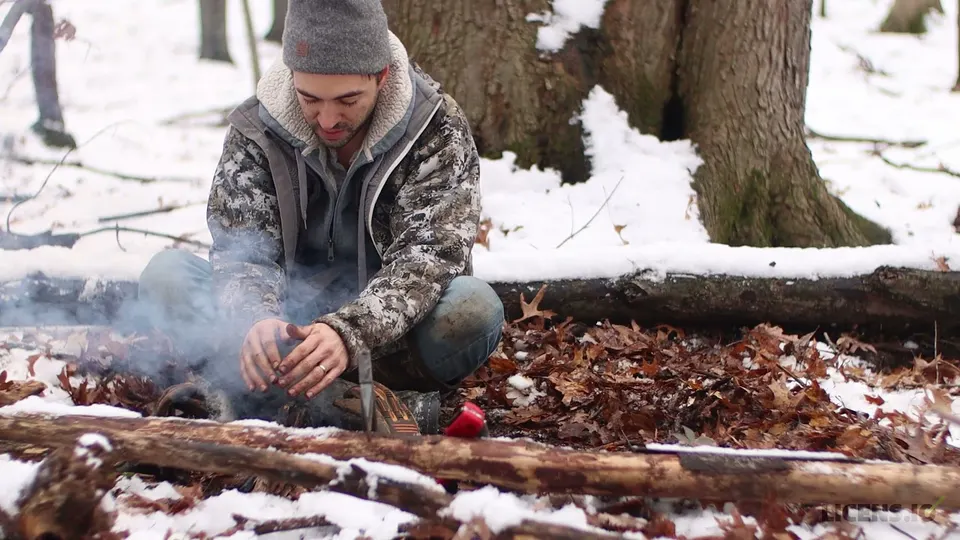
description
What really makes us human? Is it control of fire? Or was the real flame our ability to #model?
Once upon a time, there was dark and cold. The rhythm of life was dictated by the sun and seasons. We survived on what we could chew and digest, pathogens included. Then, we broke these chains through elemental fire. Night became day. Cold became warm. Food became safe(r).
Fire served an existential purpose. It helped us manage uncertainty, to wrestle control back from the chaotic world around us. And, primally, it helped us manage the anxiety and fear that came with the cold and dark - the #risk and #uncertainty.
You may have noticed that our slightly-larger band of primates has recently rediscovered its relative helplessness on this nickel-and-iron space rock. In fact, I’d wager a dozen eggs, a bushel of winter wheat, and a can of .308 that you’ve probably been thinking about what the R0 of B1.1.529, the so-called Omicron variant, is.
As strange as it is for me to say, I want you to stop for a moment and let these waves of fear crash against your psyche. Think about how little you control - and how something so infinitesimally little can control us so completely. Consider the historically-repeated triad of cascading failures - plague, famine, war - that could shatter the loosely-coupled system of systems that we call society. Now, imagine these raw emotions in a world where you could barely control the light and temperature of your environment.
What would you do? How would you grapple with this overwhelming anxiety? Or, asked more practically, what did we humans *actually* do?
The answer is really pretty simple. We cast our gaze upwards, away from the gravity of our reality.
Mostly, we saw stars. Other times, we saw birds. Sometimes, we thought the stars looked like birds. And occasionally, we saw celestial objects like novae, meteors, or comets that looked like some kind of really special, really cool scape bird.
We observed signs and #symbols.
We related them to what would happen or why it would happen.
We systematized and communicated those #causal and #predictive #frameworks across generations.
In other words, we modeled our world.
No, I’m not going to tell you that all Capricorns will expand their LinkedIn reach this week with a successful poll. And no, if you’re Pisces, you don’t need to sell Treasury futures this week.
As ever, all #models are wrong. Most models in the anthropological record were astoundingly wrong. But, they were useful - they provided us with a sense of understanding and control. Does it matter if it was a placebo effect? That’s a topic best served with whisky on another day…
In my opinion, this is our truly human character - to model for a better world for ourselves and our children.
Maybe you can do some modeling for yourself this winter. Do it by the fire, just like our ancestors originally did.
See you on next week's #WednesdayInTheWoods.
transcript
~362 words · showhide
from the human-edited captions published with the video. timestamps jump to that point in the video.
- 0:51
Good morning and welcome to Wednesday in the Woods. Today, I want to talk to you about why the real fire isn't fire. The real fire for humans is modeling. See, fire is the original way that we learned as a species to control uncertainty. Fear and anxiety specifically of cold and of certain foodborne illness - not that we knew at the time. And so, fire is often used as a demarcation between humans and the things that came before humans.
- 1:28
And I think this is reasonable. But the real fire in the sense of the tool, in my opinion, - that which distinguishes us from others - is modeling. You see, we use models in the same way that we use fire: to manage uncertainty, to control outcomes, and to manage our own fear and anxiety. In the past other than fire, we would use this sky. We would look up. We'd see stars, we'd see birds, we'd see birds in the stars, or we'd see things that looked like a magical flying space birds, like comets or meteors.
- 2:20
And we'd infer things from these signs and these symbols, we'd use them for predictions, for augury, for hepatascopy, for a wide range of things that were, as we say today, wrong but useful. Historically, models were primarily useful for managing fear and anxiety of societies. Today, we're taking that a little bit further. We're using models, not just to manage our fear and anxiety, but to deduce things, to infer things, to predict things.
- 3:00
To actually live with the uncertainty, and where possible, take advantage of it opportunistically - to convert the risk into value. And so, the real fire for our species isn't this stuff as much as it allows us to convert the cold and the dark into warmth and light and nutrients into something more readily available. Our real fire is our ability to use models to convert the uncertainty and risk in the world into opportunity and understanding.
- 3:42
And so, with that I hope you all stay warm in a way that's a little bit simpler than this and enjoy your winter. See you next week.